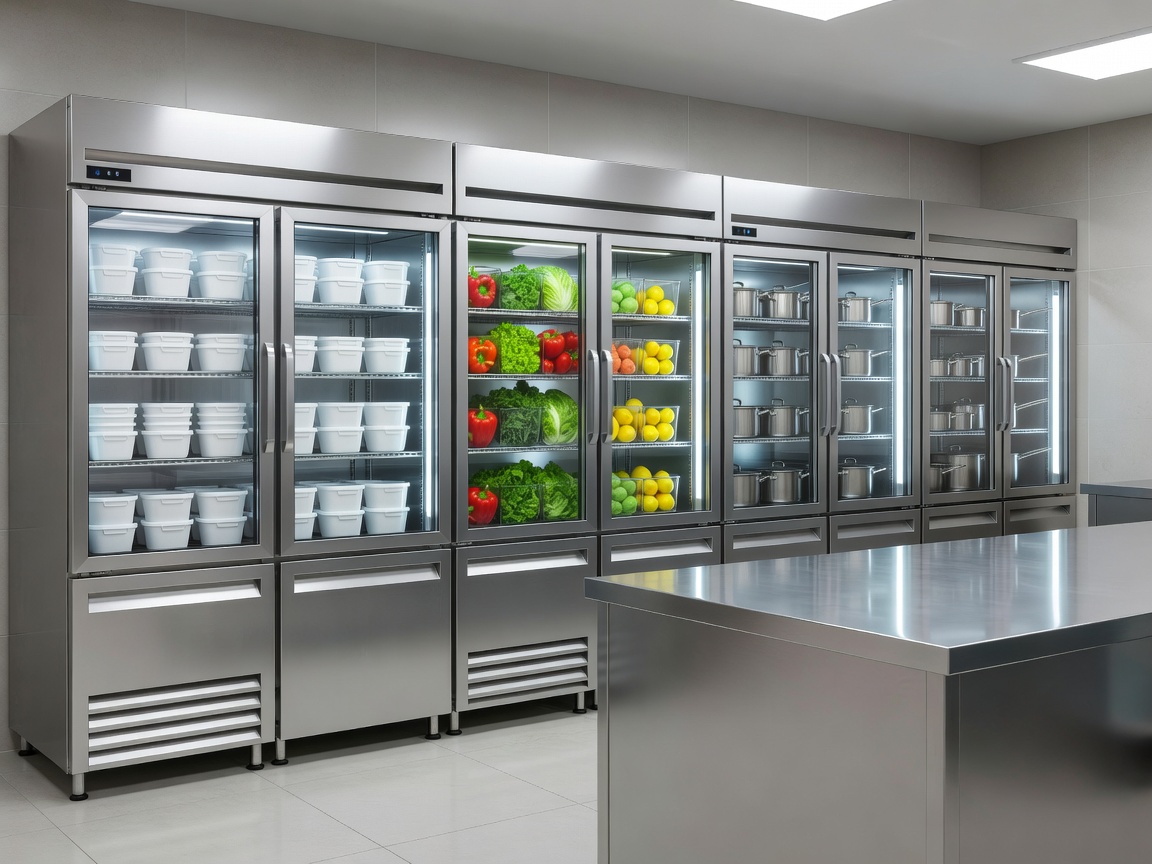
Choose for the real workload
Refrigerators support daily access and frequent loading; freezers operate at lower temperatures and may have different defrost and airflow demands. Walk-in cold storage provides volume but requires thoughtful layout, door discipline and service access. The right choice depends on menu, delivery pattern, available room and how quickly stock moves.
Capacity on paper is not the same as usable capacity. Shelving, containers, circulation space and safe separation all take room. An overfilled cabinet may look efficient while making temperature recovery and cleaning more difficult.
Temperature consistency is the goal
A display reading is useful, but it is only one part of the picture. Loading patterns, door opening frequency, ambient heat, blocked air paths and poor seals can create uneven conditions. Staff should understand the normal operating range for each unit and know how to report a reading or behaviour that changes.
Do not treat a single warm spot, repeated alarm or slow recovery as something to ignore. Professional attention may be needed when temperatures drift, the unit runs continuously, ice forms unusually, condensation appears, noises change or food storage conditions become uncertain.
Airflow and placement
Refrigeration equipment needs the clearances specified for its design. Crowding a condenser, placing a cabinet beside a strong heat source or blocking ventilation can increase workload and shorten component life. Leave access for cleaning and inspection. In a compact kitchen, a few centimetres saved in the layout can cost considerably more in service inconvenience.
Doors, seals and cleaning
Door seals should close evenly without obvious gaps or damage. Hinges, handles and closers receive constant use, especially during busy preparation. Keep shelves and interiors clean using approved routines, and ensure staff know which vents, filters or accessible surfaces can be cleaned safely.
Cleaning around equipment matters too. Dust and grease can restrict airflow; standing water can affect floors and nearby fittings. Technical cleaning and refrigeration repairs should be handled by appropriate professionals. Refrigerant circuits are not a sensible place for improvised fixes.
Service planning
Schedule checks before peak seasons or menu changes that increase cold-storage demand. Provide the technician with model details, recent temperature observations, alarm history and access information. Protect stock according to your food-safety procedures while equipment is unavailable, and agree how performance will be checked before the unit returns to normal use.
Repair or replacement?
Consider age, energy use, repair history, parts availability, capacity and the cost of disruption. A repair may be sensible when the cabinet is otherwise suitable and the fault is isolated. Replacement can make more sense when failures repeat, insulation or structure has deteriorated, or the unit no longer suits the operation. Compare the whole operating picture rather than one invoice.
- Keep airflow and service clearances open.
- Monitor patterns, not just one reading.
- Report alarms, ice, leaks and unusual noise quickly.
- Plan service around stock and delivery schedules.