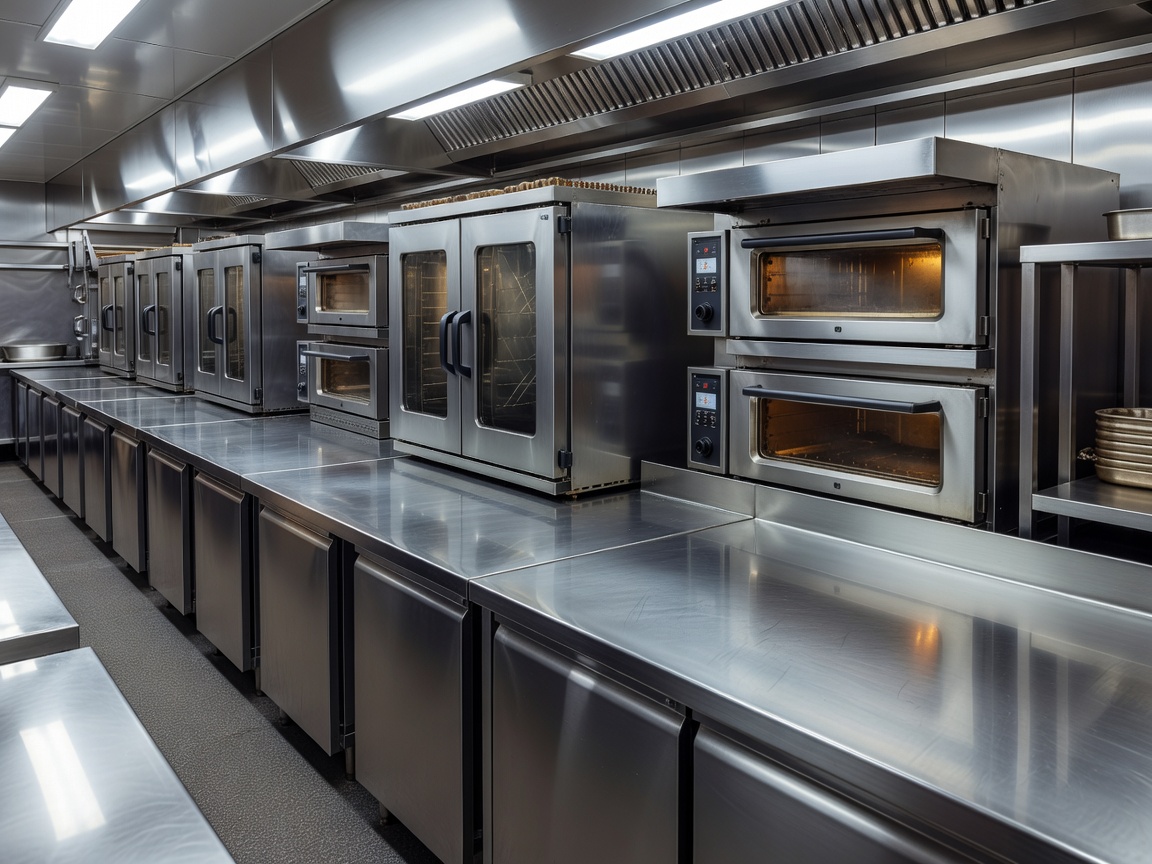
Understand the duty pattern
Cooking equipment is not used in one universal way. A bakery oven, hotel range, café griddle and catering appliance may all experience different temperatures, loading patterns and cleaning routines. Service frequency should reflect operating hours, heat exposure, grease load and the consequence of failure.
Start with the equipment list and note which units are central to the menu. A secondary appliance may tolerate a longer service window; the only oven may deserve earlier attention because its downtime affects the whole operation.
Heat and wear
Repeated heating and cooling places stress on components, seals, hinges, controls and surfaces. Heavy pans, rushed loading and accidental impacts add physical wear. Changes in heat-up time, uneven cooking, unusual cycling, inconsistent controls or new noises should be recorded rather than dismissed as the equipment “getting old”.
Keep the surrounding area clear and provide the clearances required by the equipment documentation. Heat can affect nearby refrigeration, electrical components, finishes and staff movement. Ventilation must be appropriate for the cooking load and coordinated with the wider room.
Cleaning supports serviceability
Grease and carbonised residue can obscure faults and make components work harder. Establish clear staff routines for safe, approved cleaning. Separate everyday cleaning from technical tasks that require isolation, specialist knowledge or qualified personnel. Never remove guards or bypass safety systems to speed up a shift.
Access is part of the design. If an oven or range is boxed tightly into a run, both cleaning and diagnosis become slower. A little planned space can make future work less disruptive.
Planned service intervals
A service visit may include inspecting controls, seals, connections, ventilation interfaces and general operating condition. The exact work depends on the equipment and its instructions. Keep records of completed checks, reported symptoms and recommendations. If the same fault returns, that history helps decide whether a deeper repair or replacement assessment is appropriate.
Repair or replacement?
Compare repair cost with age, reliability, energy performance, parts availability, production capacity and disruption. Continuing to maintain familiar equipment can be sensible when it remains safe and suitable. Replacement may be better when failures are frequent, performance is inconsistent, the equipment no longer matches the menu or access makes every repair disproportionately complex.
Do not base the decision on purchase price alone. Consider installation changes, extraction, electrical capacity, staff familiarity, downtime and disposal. A cheaper unit that complicates the room is rarely cheap for long.
Prepare for a service visit
- Record model, location and recent symptoms.
- Note when the fault occurs and under what load.
- Clear safe access and agree the service window.
- Keep staff available for operating context.
- Confirm what testing is needed before reopening.